Looking for space-saving, water-efficient ways to grow herbs, leafy greens, and small vegetables at home? These vertical hydroponic grow towers deliver compact, scalable solutions with built-in water circulation, timers, and multilayer designs. Ideal for urban dwellers, apartment gardeners, and anyone seeking faster yields with less soil mess. Below are five top options chosen for versatility, ease of use, and clear value for different growing goals.
| Product | Best For | Key Benefit |
|---|---|---|
| TIRUSS Vertical Hydroponic Grow Tower (9 Layer) | Space-constrained kitchens and patios | High plant count in tight footprint |
| Hydroponic Tower 14-Layer (70 Plants) | High-yield urban farming | Large capacity with top-to-bottom watering |
| JPWDDWYT 35-Plants Indoor Tower | Budget-friendly and movable setups | Compact, mobile design with top-down irrigation |
| VEVOR 30 Pods 6 Tiers | Smart control and low maintenance | App control and large reservoir |
| ALTO GARDEN GX Hydroponic Tower | No-subscription, self-contained systems | Self-watering, built-in lighting |
TIRUSS Vertical Hydroponic Grow Tower, 9 Layer

Best for compact homes, this 9-layer tower holds 36 pots and integrates a water tank and pump for aeroponic-style growth. The design emphasizes water efficiency, recycling up to a high percentage of used water, and a small footprint that still enables multiple plants to thrive simultaneously. Best suited for beginners who want a straightforward, all-in-one vertical garden with clear water circulation benefits.
Why chosen: It delivers a dense planting arrangement without requiring a large garden space, making it ideal for balconies and kitchens where floor space is limited. The integrated water system supports faster growth by delivering precise nutrient delivery.
Who it’s best for: Apartment dwellers or homeowners with limited outdoor space who want to maximize output from a single corner.
Limitation: Specific plant variety compatibility isn’t listed; users may need to adapt nutrient concentrations for different crops.
Hydroponic Tower, 14-Layer, 70 Plants

This 14-layer vertical system yields up to 70 plants with a top-to-bottom watering approach. The built-in 20L water tank and submersible pump support days of autonomous operation, reducing daily maintenance. It suits urban growers who want sizable harvests in a balcony, patio, or sunroom.
Why chosen: The large capacity and consistent moisture delivery support continuous cycles, minimizing refill frequency and manual intervention.
Who it’s best for: Busy urban gardeners seeking high output with minimal daily care.
Limitation: The larger footprint may require more space than smaller towers, which could limit placement options in very tight interiors.
JPWDDWYT Hydroponics Tower, 35-Plants

With the capacity for 35 plants, this indoor tower emphasizes soil-free cultivation and an automatic top-down water cycle for efficient irrigation. Its compact form makes it easy to relocate inside living spaces and adapt to changing layouts while still delivering a high yield per square foot.
Why chosen: The strong focus on water efficiency and mobility makes it a practical option for rooms with limited wall space or frequent layout changes.
Who it’s best for: Home cooks and hobbyists who want a movable, space-saving garden that can adapt to interior design changes.
Limitation: The data does not specify the exact nutrient management features, so plan to monitor nutrient levels closely.
VEVOR Hydroponic Tower, 30 Pods

This 6-tier tower features 30 planting pods and a 20L water tank with a timer-equipped pump. It emphasizes energy efficiency and compact design for apartments, balconies, and kitchens. The system supports steady water circulation and oxygenation for healthy root growth.
Why chosen: App-based or timer-controlled operation helps maintain consistent schedules, reducing manual monitoring and improving plant reliability.
Who it’s best for: Tech-minded gardeners who want remote control and predictable watering patterns.
Limitation: Some users may find the initial setup or app pairing requires careful instructions to avoid misconfigurations.
ALTO GARDEN GX Hydroponic Tower
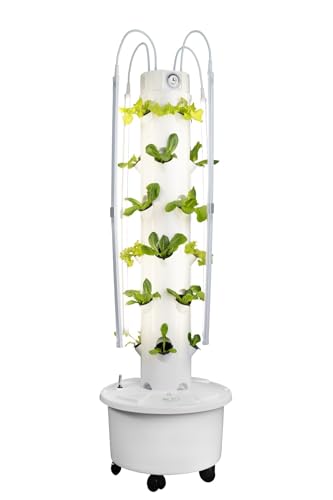
The ALTO GARDEN GX is a fully contained, self-watering and self-lighting system. Its 2mm-thick tower walls and wide-spaced pot design aim to minimize leaks and maximize plant room. No monthly subscription is needed to access core features, differentiating it from some subscription-based kits.
Why chosen: This option stands out for buyers seeking a complete, low-maintenance system with built-in lighting and water management, reducing ongoing costs and complexity.
Who it’s best for: Beginners and small households wanting a straightforward, self-contained grow tower with minimal ongoing fees.
Limitation: Self-lighting may require a power source and can increase energy consumption if lights are left on longer than needed for certain crops.
Buying Guide: Key Considerations For Your Vertical Hydroponic Tower
- Space and footprint: Measure the intended area and compare with tower height and base width. Taller towers save floor space but may require ceiling clearance.
- Capacity vs. space: Decide how many plants you want to grow and whether you prefer dozens of small herbs or a mix of greens and small vegetables.
- Water management: Look for built-in reservoirs, timers, and recirculating pumps. Larger tanks reduce refills but add weight and maintenance considerations.
- Power and controls: Evaluate whether you want manual pumps or smart/app-controlled systems. Timers help maintain consistent moisture and nutrient delivery.
- Maintenance and cleaning: Consider materials, leak-prevention design, and ease of disassembly for cleaning between crops.
- Light requirements: If the system includes grow lights, assess brightness, spectrum, and energy use. Self-lighting reduces the need for external lighting.
- Plant compatibility: Check recommended plant types and spacing per pod. Some towers are optimized for leafy greens, herbs, strawberries, or compact vegetables.
Practical Shopping Questions
- What is the best tower for a balcony with limited height? Choose a model with a smaller height and stable base, such as the compact 6- to 9-layer options.
- Which tower minimizes water waste the most? Look for systems with high recycling rates, large reservoirs, and efficient nutrient delivery.
- Do I need app control? If you want automated scheduling and remote monitoring, select a tower with smart controls and timers.
- Is soil-based experience needed? No. All listed options are hydroponic or aeroponic-style, designed for water-based growth with minimal soil use.
- Can I grow strawberries or tomatoes in these towers? Many towers support berries and small fruiting plants, but verify pod spacing and plant height for each crop.
Frequently Asked Questions
- How much space do vertical hydroponic towers require? Typical footprints range from about 1.5 to 2.5 feet square, depending on the model and base design.
- Are these towers suitable for beginners? Yes, many kits are designed for easy setup with step-by-step instructions and built-in features.
- Do they require soil? No. They operate as soil-free systems using water-based nutrient delivery.
- Will towers work indoors year-round? Yes, most models are designed for indoor use with or without grow lights, depending on the crop.
- How often do I refill the water tank? It varies by tank size and plant load, but larger tanks (20L+) typically reduce refills to once per several days or weeks depending on usage.