Growing vegetables in containers is a practical way to maximize space, improve soil quality, and simplify harvests. This article highlights top-rated planting containers designed for vegetables, including grow bags and fabric raised beds. Each product is evaluated on durability, drainage, portability, and reuseability to help American gardeners choose the best option for their space and climate. A concise buying guide follows to compare materials, sizes, and maintenance considerations.
Selected products overview (summary table):
| Product | Brand | Container Type | Key Benefit |
|---|---|---|---|
| Cavisoo 5-Pack 10 Gallon Potato Grow Bags | Cavisoo | Nonwoven fabric grow bags | Durable 300g fabric; reinforced handles; excellent drainage |
| [Upgraded] 4Pcs 15 Gallon Grow Bags | PAMAZY | Nonwoven fabric grow bags | Harvest window; strong double handles; reusable |
| CJGQ Fabric Raised Garden Bed | CJGQ | Fabric raised bed (8-grid) | Large 128-gallon capacity; 360-degree drainage |
| 2 Pack Plant Grow Bags (90x30x20 cm) | Yzkanning | Fabric grow bags | Thick 400G/㎡ fabric; durable; reusable |
| Fall & Winter Vegetable Seed Collection | SURVIVAL GARDEN SEEDS | Seed collection | Non-GMO heirlooms for cool weather |
Best Cavisoo 5-Pack 10 Gallon Potato Grow Bags
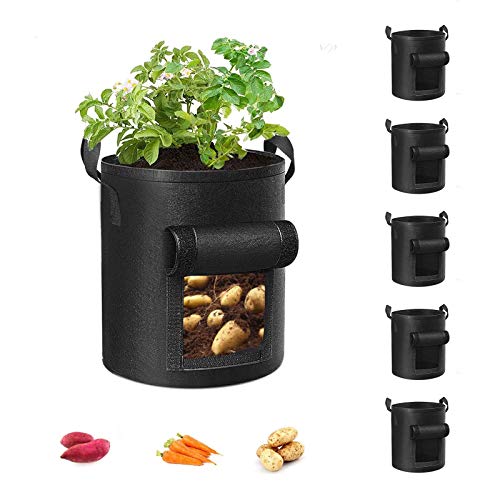
The Cavisoo grow bags are designed for root crops and vegetables, featuring 300g thick nonwoven fabric that resists wear and can be reused for multiple seasons. The breathable material promotes rapid drainage and aeration, helping potatoes, tomatoes, and other plants develop healthy roots. A reinforced polypropylene handle with X-shaped stitching supports heavier crops, making transport and relocation easier for gardeners with limited space.
Upgraded 4Pcs 15 Gallon Grow Bags With Harvest Window

This PAMAZY set adds practical harvest windows to help you monitor ripeness without digging. The 15-gallon capacity comes with two reinforced longer handles for easy lifting, even when bags are full. Constructed from durable, breathable nonwoven fabric, these bags are designed for repeated use and fold flat for storage when not in use. The harvest doors open toward the bottom, reducing soil loss and making harvest quick and clean.
CJGQ Fabric Raised Garden Bed With Eight Grids

The CJGQ fabric raised bed enables modular, grid-based planting in a large 128-gallon space. Thickened non-woven fabric, reinforced stitching, and 360-degree ventilation support robust root development and drainage, reducing waterlogging on patios, balconies, or yards. Its expansive surface area is suitable for potatoes, leafy greens, and a variety of vegetables, accommodating seasonal shifts in planting plans.
Yzkanning 2-Pack Plant Grow Bags

These 2-pack grow bags feature 400G/㎡ thickened nonwoven fabric for durability and long-term use. The sizes (90x30x20 cm) offer a broad planting footprint while remaining portable. Their breathable material supports healthy root systems by promoting air circulation and drainage, helping vegetables, fruits, and flowers flourish in a compact, reusable container.
Fall & Winter Vegetable Seed Collection

This seed collection focuses on cool-season varieties ideal for fall and winter gardening. The eight non-GMO heirloom varieties include staples like lettuce, spinach, kale, beets, carrots, and Brussels sprouts. It serves as a complementary component for container gardening, allowing gardeners to stagger crops and ensure continuous harvests when outdoor conditions are cooler.
Buying Guide: Key Considerations For Choosing Vegetable Planting Containers
- Material and durability: Nonwoven fabric bags are breathable and lightweight, with variations in weight (e.g., 300g vs 400G/㎡). Look for reinforced stitching and sturdy handles for portability.
- Drainage and aeration: Fabric containers generally offer superior drainage and air-pruned roots, reducing root rot. Ensure bags are breathable and not glued shut at seams.
- Size and capacity: Match container size to crop expectations. 10–15 gallon bags suit potatoes and large vegetables; larger raised beds increase growth space but require more storage and maintenance.
- Harvest convenience: Features like harvest windows and easy access doors minimize soil disturbance and improve yield monitoring for root vegetables.
- Reusability and storage: Reusable fabrics save money over time. Consider foldability for off-season storage and washing instructions for longevity.
- Climate compatibility: In colder regions, larger containers may require insulation or placement in sunlit spots. For balconies and patios, consider weight distribution and wind exposure.
- Seed compatibility: Seed collections pair well with containers when planning a seasonal crop rotation, especially for fall and winter gardening in containers.
Additional Perspectives: How To Use Planting Containers For Best Results
- Soil and amendments: Use a high-quality potting mix or well-draining soil with compost. Do not overfill containers; leave space for root growth and moisture retention without waterlogging.
- Watering strategy: Fabric bags tend to dry out faster than rigid pots. Establish a consistent watering schedule, checking moisture several times weekly in hot climates.
- Planting layout: In fabric raised beds with grids, rotate crops by grid to prevent pest buildup and soil nutrient depletion. For small spaces, group bags by sun exposure to maximize light capture.
- Maintenance: Inspect handles and seams regularly. Rinse or wash bags after harvest to extend life. Fold and store containers flat when not in use.
- Pest and disease management: Elevate bags off the ground when possible to improve airflow and reduce soil-borne diseases. Use clean tools and avoid soil transfer between containers.
Frequently Asked Considerations
- Are fabric grow bags suitable for potatoes and root vegetables? Yes, many bags have sizes around 10–15 gallons and provide good drainage and root development.
- Can I reuse fabric planters for multiple seasons? Most bags are designed for several years with proper care and cleaning.
- What crops perform well in fabric raised beds? Leafy greens, herbs, tomatoes, peppers, and small root crops often thrive in breathable containers.