Answering the buyer’s search intent, these evergreen-focused plant foods help promote vibrant color, steady growth, and stronger roots for evergreen shrubs. The best options are formulated to feed roots slowly, support acid-loving plants, and encourage lush foliage. This guide highlights five products suited for homeowners, landscape managers, and gardening enthusiasts who want reliable evergreen care without complex mixing. Each selection notes who it’s best for and why, plus a quick caution if the data suggests a limitation.
| Product | ||
|---|---|---|
| Miracle-Gro Tree & Shrub Plant Food Spikes | Homeowners seeking slow-release nourishment directly to roots | |
| Scotts Evergreen Flowering Tree & Shrub Continuous Release | Evergreens and acid-loving shrubs needing up-to-2-month feeding | |
| Arborvitae Tree Fertilizer – Liquid Plant Food | Arborvitae and evergreen hedges needing rapid foliar support | |
| Miracle-Gro Shake ‘N Feed Flowering Trees and Shrubs | Flowering evergreens and other acid-loving plants | |
| Espoma Organic Evergreen-Tone 4-3-4 | Need for an organic option for needleleaf and broadleaf evergreens |
Note: The five products below were selected for broad evergreen relevance, delivery method diversity (spikes, granules, liquids), and explicit benefits for foliage, root growth, and disease resistance. Each product aligns with evergreen care goals while offering clear usage guidance.
Miracle-Gro Tree & Shrub Plant Food Spikes

Type: Spikes. Best for: Home gardeners needing simple, direct root feeding for trees and shrubs. How it helps: These slow-release spikes deliver nutrients to roots where absorption is strongest, supporting vibrant color and foliage. Why chosen: Easy application with minimal mess; ideal for evergreen trees and acid-loving plants like hydrangeas when in mixed beds. Caution: Spikes are best used around established plants; avoid placing directly against trunks to prevent tissue damage.
Scotts Evergreen Continuous Release Plant Food
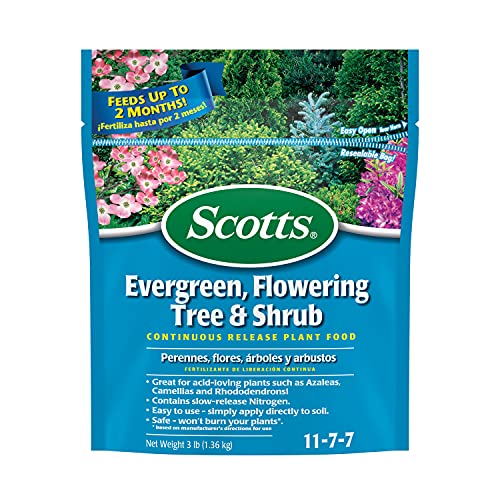
Type: Granular. Best for: Evergreens, dogwoods, hydrangeas, magnolias, and other acid-loving trees and shrubs. How it helps: Feeds for up to 2 months and encourages vigorous root growth and lush foliage. Why chosen: Long-lasting feeding with broad compatibility for acid-loving evergreens. Caution: May require periodic reapplication depending on soil conditions and plant size.
Arborvitae Tree Fertilizer – Liquid Plant Food

Type: Liquid. Best for: Arborvitae trees and evergreen hedges needing balanced, steady nutrition. How it helps: Supports dense foliage and strong root systems with nutrients tailored for evergreen development. Why chosen: Quick-acting delivery for rapid uptake; useful when you want faster visible growth responses. Caution: Liquid formulas can require more frequent application than slow-release products; follow label directions to avoid over-fertilization.
Miracle-Gro Shake ‘N Feed Flowering Trees and Shrubs

Type: Granular. Best for: Flowering trees, shrubs, and other acid-loving plants. How it helps: Contains natural ingredients that feed soil microbes and supports deep, green foliage and colorful blooms. Why chosen: Promotes a robust soil ecosystem while delivering steady nutrition. Caution: Not all formulations cover the exact same plant types; ensure the product matches evergreen and acid-loving shrub needs for best results.
Espoma Organic Evergreen-Tone 4-3-4 (8 lb)

Type: Organic fertilizer. Best for: Needle leaf and broadleaf evergreens, including pine, fir, spruce, juniper, azaleas, rhododendron, and camellias. How it helps: Rich blend of natural ingredients with Bio-tone formula; ready to use with no mixing. Why chosen: An organic option for gardeners prioritizing environmentally safe inputs. Caution: Requires two applications per year (early spring and late fall) for many evergreen timelines; follow seasonal guidelines for optimum results.
Buying Guide: Key Purchase Considerations
- Delivery method: Choose spikes for direct root feeding, granules for long-lasting soil contact, or liquids for rapid uptake. Consider your watering schedule and the plant size when selecting.
- Plant compatibility: Ensure the formula supports evergreen and acid-loving shrubs common in American landscapes, such as pines, spruces, azaleas, and rhododendrons.
- Organic vs synthetic: If you prefer organic options, Espoma Evergreen-Tone and similar blends provide natural ingredients with Bio-tone; synthetic options like Miracle-Gro and Scotts can offer predictable release times.
- Feeding schedule: Some products feed for weeks or months; others require seasonal applications. Align with your plant’s growth cycle and local climate.
- Environmental considerations: Avoid fertilizer run-off by applying at the base of shrubs and watering as directed to minimize leaching.
- Application safety: Follow label directions for spacing from trunks and avoiding over-fertilization, which can harm evergreen foliage.
FAQ
- What is the best fertilizer type for evergreen shrubs? A mix of slow-release granular formulations and organic options is effective for steady growth; choose based on preference for organic ingredients and application ease.
- How often should evergreen shrubs be fed? Most evergreens benefit from one to two applications per year, typically in early spring and late fall, depending on product instructions.
- Can I use fertilizer around the trunk? Apply evenly around the drip line, not directly against the trunk, to prevent root or bark damage and ensure even distribution.
- Are fertilizer spikes better than granular forms? Spikes provide direct root delivery with minimal surface contact, while granules offer longer soil interaction; choose based on watering habits and plant size.
- Do organic fertilizers work as well as synthetic ones? Organic options support soil biology and longer-term soil health, while synthetic products often provide quicker, measurable results; both can be effective when used correctly.
- Is fertilizing evergreen trees necessary if they look healthy? Fertilizing can support continued vigor, especially in nutrient-poor soils or stressed landscapes, but avoid over-fertilization to prevent leaf burn and growth imbalance.