Answering the question “which aquatic herbicides are best for ponds?” this guide highlights five reliable products to control floating, submerged, and emergent weeds. The selections are suited for residential ponds, small lakes, and waterfronts where effective weed management is needed without harming fish or wildlife. Each product targets common pond nuisances like duckweed, watermilfoil, cattails, and pondweed, with notes on usage and best-for scenarios to help you compare quickly.
Quick comparison table of selected products:
- Tsunami DQ Aquatic Herbicide (Quart) — Diquat-based, fast-acting, best for many weed types.
- Airmax Shoreline Defense Emergent Weed Control (Quart) — Emergent weed control, best for shoreline and docks.
- Alligare Diquat Aquatic Herbicide (1 Gallon) — Non-selective, fast-acting across terrains, best for fast results.
- Weedtrine D Aquatic Herbicide (1 Gallon) — Diquat active, for broad weed control along shorelines.
- Sonar RTU Aquatic Herbicide (Quart) — Ready-to-use, long-season control, good for fish-friendly use.
Tsunami DQ Aquatic Herbicide, Quart

Best for broad-range weed control, Tsunami DQ uses diquat dibromide to target submerged, floating, and emergent weeds. It’s formulated to deliver quick results in ponds and lakes, making it a strong option for fast reduction of duckweed, watermeal, curly leaf, and pondweed. This product is not sold in certain states, so confirm local restrictions before purchase. Use when rapid weed kill is desired and water uses are routine after treatment.
Who it’s best for: homeowners aiming for a fast, broad-spectrum reduction of common pond weeds; those needing quick, visible impact for a season’s weed pressure.
Limitation: Some states restrict sale; check state eligibility. Also, non-selective action means non-target plant tissue can be affected if applied improperly.
Airmax Shoreline Defense Emergent Weed Control (Quart)

Best for shoreline and emergent weeds, this glyphosate-based product targets cattails, phragmites, grasses, and brush along docks and beaches. It’s a ready choice for reclaiming beachfront areas where roots extend into shallow water. For best results, apply with a surfactant and ensure the treatment reaches foliar tissue for root kill and longer-term control.
Who it’s best for: pond owners with active shoreline growth and persistent emergent weeds needing rooted control near water edges.
Caution: Apply as directed with proper surfactant; avoid non-target plants close to water margins if they’re valued in your landscape.
Airmax Shoreline Defense Emergent Weed Control (Gallon)

Best for larger shoreline applications, this gallon version provides the same broad-spectrum, root-killing capability as the quart, making it suitable for bigger ponds or extensive shorelines. It’s helpful for property owners who want fewer applications over a season and predictable root-level control of emergent weeds.
Who it’s best for: larger ponds or shorelines where users prefer fewer, larger-volume treatments; those prioritizing root kill for longer-term control.
Limitation: Ensure proper dilution and application, as overuse near sensitive shore habitats can affect non-target flora.
Alligare Diquat Aquatic Herbicide (1 Gallon)

Best for quick, broad-spectrum weed kill without glyphosate, Alligare Diquat provides rapid control across aquatic and landscape environments. It’s suitable where a fast-acting, non-selective solution is desired to clear dense weed patches that hinder water flow or use. It’s effective in ponds, lakes, and drainage areas when used as directed.
Who it’s best for: pond managers who need fast action without glyphosate; property owners seeking a versatile product that works across aquatic and nearby terrestrial areas.
Limitation: As a non-selective herbicide, misapplication can affect wanted vegetation; follow label directions for site and application rates.
Weedtrine D Aquatic Herbicide (1 Gallon)
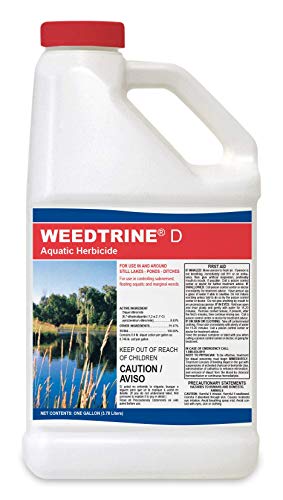
Best for broad-spectrum control along shorelines, Weedtrine D targets duckweed, floating, and emergent weeds. It’s designed for professional-grade results and easy application for rapid weed suppression. Use where water-quality demands quick improvement and weed pressure is high near shorelines.
Who it’s best for: owners needing a strong, ready-to-use option for a diverse weed profile on shores and littoral zones.
Limitation: Some applications restrict water use, irrigation, or swimming during treatment; verify local guidelines before use.
Sonar RTU Aquatic Herbicide (Quart)

Best for ease of use and season-long control, Sonar RTU offers systemic weed management with no mixing or equipment needed. It is EPA approved and considered safe for fish and wildlife when used as directed. Ideal for residential ponds, farms, and small lakes where simple, scalable weed control is preferred.
Who it’s best for: gardeners and small- to mid-sized pond managers seeking a straightforward, ready-to-use solution with long-lasting effects.
Limitation: No mixing or equipment is convenient, but it requires correct dosing and adherence to label directions for safe use around wildlife and water resources.
Buying Guide: Key Considerations For Choosing Pond Aquatic Herbicides
- Weed type and growth stage: Identify whether your pond has duckweed, hydrilla, emergent cattails, or filamentous algae, and select a product geared toward that weed profile.
- Application method: Consider whether you prefer ready-to-use formulas, concentrate mixtures, or gallon-sized containers for larger properties.
- Water-use and safety: Check irrigation and fish/wildlife safety guidelines, especially for residential ponds used for swimming or drinking water for animals.
- Environmental impact: Look for products with rapid dissipation and minimal non-target effects when used correctly. Follow label instructions to protect beneficial plants and aquatic life.
- State and local restrictions: Some products are not available in certain states. Confirm eligibility and any permit requirements before purchasing.
- Seasonality and duration: Choose products with fast action if weed pressure is high, or longer-duration solutions if you prefer fewer applications.
- Combination and rotation: Use herbicides with different modes of action in rotation to manage herbicide resistance and maintain effectiveness over multiple seasons.
Frequently Asked Questions
- What is the fastest way to eliminate pond weeds? Look for fast-acting diquat-based products or ready-to-use formulations designed for immediate contact with weed tissue.
- Are herbicides safe for fish and wildlife? Many products claim safety when used as directed, but always follow label instructions and apply during appropriate weather and water-use windows to minimize impact.
- Can I use these products in a small backyard pond? Yes, many are suitable for residential ponds, but confirm product labels for pond size, water depth, and nearby vegetation.
- Do I need a permit to apply aquatic herbicides? Some jurisdictions require permits or have restrictions for certain chemicals. Check local regulations before application.
- Should I mix herbicides with surfactants? Some products recommend surfactants to improve foliar uptake; follow the label recommendations for the correct combination.
- Can I use more than one product at the same time? Caution is advised. Use products with different active ingredients in rotation and avoid mixing unless explicitly permitted by the label.