Direct answer: Keiki paste helps stimulate new growth at plant nodes, enabling baby orchids and other houseplants to form keikis or new shoots. This guide compares top keiki pastes for orchids and common houseplants, so buyers can pick the right product for beginners, hobbyists, or advanced propagators. Best choices are evaluated for ease of use, versatility, and growth potential. The table below highlights five well-matched options and who they suit.
Summary table already included in this article; see the Buying Guide for practical differences.
| Product | Best For | Size | |
|---|---|---|---|
| Crazy Keiki Cloning Paste | Beginner to intermediate orchid growers | 0.25 oz | Natural hormones and vitamins for node nourishment |
| Miracle Lab Keiki Cloning Paste Special Cytokinin Formula | Orchid enthusiasts seeking straightforward keiki formation | 1 pack | Cytokinin-based stimulation for keiki formation |
| Berkland Keiki Paste for Plants | Prolific propagation across multiple species | 0.5 oz | Double paste amount; combines rooting hormone and nutrients |
| Cute Farms Keiki Cloning Paste | Orchid growers and vine plants | 0.5 oz | Lanolin-based formula with cytokinins and vitamins |
| ARES TECHNOLOGY Keiki Cloning Paste | Orchid lovers seeking simple propagation | 0.5 oz (gel) | Effortless propagation with plant-friendly growth hormones |
Crazy Keiki Cloning Paste By Southside Plants

Best for: beginners who want a straightforward keiki option on orchids and other houseplants. This paste uses a blend of natural plant hormones, lanolin, and vitamins to nourish nodes and support regeneration. It includes an 8 g vial, applicator sticks, and a QR guide for easy reference. It’s designed to create growth conditions that can yield tiny buds in 3–4 weeks when light and care are appropriate. Limitations include relying on proper light and fertilizer for optimal results.
Miracle Lab Keiki Cloning Paste Special Cytokinin Formula

Best for: orchid growers who want a simple application to stimulate keiki formation. The paste contains cytokinin to trigger dormancy nodes into producing new growth. Instructions suggest applying one node per branch, with a natural progression toward a baby orchid. A caution is to monitor for root development before separating keiki, typically after roots reach a usable length.
Keiki Paste For Plants By Berkland

Best for: plant collectors seeking a value-friendly option with doubled paste. This product claims to clone growth by applying paste at plant nodes, creating identical traits across orchids and other popular houseplants. It combines rooting hormone with growth nutrients for simultaneous root and shoot development. Limitations include needing multiple applications for larger collections.
Keiki Cloning Paste By Cute Farms
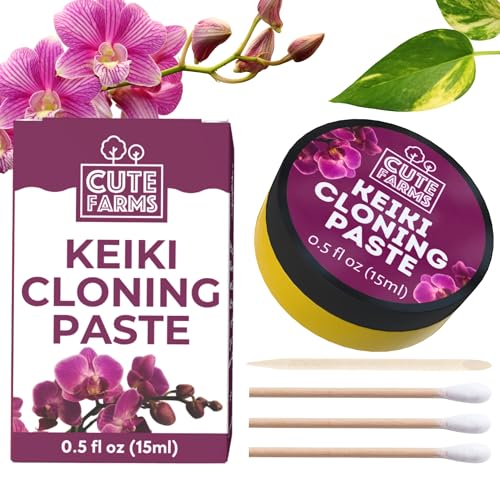
Best for: beginners and hobbyists who want a compact, user-friendly option. The paste uses lanolin and cytokinins to activate dormant nodes, promoting keiki on orchids and new shoots on other houseplants. It’s compact but potent, with enough paste for many applications. A potential limitation is that results depend on node visibility and light conditions.
Keiki Cloning Paste By ARES TECHNOLOGY

Best for: orchid lovers who prefer a straightforward, no-fuss propagation aid. The gel formulation focuses on easy application to dormant nodes, with clear aims toward keiki and new growth. It’s described as versatile beyond orchids to other popular houseplants. Caution: check your plant’s node readiness and ensure consistent care to support new growth.
Miracle Lab Keiki Cloning Paste – 2 Pack

Best for: users who want multiple kits for larger collections or separate plant groups. This product offers a two-pack of cytokinin-based keiki paste, enabling propagation across several plants without constant reorders. A limitation to consider is ensuring separate timelines for each plant to avoid cross-contamination and to track growth progress.
Buying Guide: Key Purchase Considerations
What should you consider when selecting keiki paste?
- Active ingredients: Look for cytokinins and rooting hormones that stimulate both root and shoot development. Some blends also include vitamins or lanolin to aid adherence and nourishment.
- Size and value: If you propagate many plants, a larger jar or two-pack may offer better value per application. Consider how many nodes you plan to treat in a season.
- Plant compatibility: Although designed for orchids, many keiki pastes work on monstera, philodendron, or ficus species. Read product notes on multi-plant compatibility to avoid mismatches.
- Ease of use: Beginners benefit from pre-applied applicators or simple dab-on methods. Complex steps may require more careful timing and monitoring.
- Instructions and support: QR guides, illustrated directions, or access to a care guide help reduce trial-and-error time.
- Care conditions: Keiki growth depends on light, humidity, and watering. Ensure your plant environment supports new growth after application.
What are common pros and cons of keiki pastes?
- Pros: Encourages new growth directly on the plant, can create multiple clones from a single specimen, and often works across several plant types.
- Cons: Results vary by plant health and care, some products require careful separation of keiki once roots are established, and overuse may irritate tissue if not applied properly.
How to apply keiki paste effectively?
- Identify visible nodes on stems or spikes where keiki formation is plausible.
- Apply a small amount per node, following the product’s guidelines to avoid over-application.
- Maintain appropriate light, water, and nutrient conditions after application to support growth.
- Monitor growth weekly; separate keiki from the mother plant once it has a few roots (usually a couple of inches long) or as recommended by the product.
FAQ
- Q: What is a keiki in orchid care?
A: A keiki is a baby orchid that forms on a mother plant’s stem or node, developing roots and foliage before being transplanted. - Q: Can keiki paste work on non-orchid plants?
A: Yes, many keiki pastes are formulated for both orchids and common houseplants to promote new growth at nodes. - Q: How long does it take to see keiki growth?
A: Growth can begin in a few weeks under proper light and care, depending on plant health and paste quality. - Q: Should I separate the keiki immediately after growth?
A: Wait until the keiki has a robust root system (often 2 inches or more) before separating from the mother plant. - Q: How often should I apply keiki paste?
- Q: Is keiki paste safe for all plant species?
A: Follow each product’s instructions; many recommendations involve single applications per node with observation of subsequent growth.
A: Most are designed for a range of houseplants, but always check the label for plant compatibility to avoid unintended effects.