Answering your watering questions with precise readings, these soil moisture meters help keep potted plants healthy. Ideal for houseplants, succulents, and garden pots, they indicate when to water, preventing overwatering or underwatering. The top picks here are best for different pot sizes, plant types, and maintenance preferences.
| Product | Best For | Key Benefit |
|---|---|---|
| Sustee Aquameter (Small) — Set of 5 | Small pots and succulents | Leave-in design for continuous monitoring |
| Sustee Aquameter (Medium) — Set of 5 | Mid-size pots | Long-term, refillable sticks for ongoing use |
| XLUX Soil Moisture Meter (2015 Design) | General indoor/outdoor use | Long-standing reliability and easy, battery-free reads |
| Censinda Soil Moisture Meter | Indoor/outdoor garden and lawn | No battery required with fast readings |
| UNIWA Soil Moisture Meter (2-Pack) | Portable use, multiple spots | No batteries, compact and quick readings |
Note: Each product is selected for reliable, easy interpretation of soil moisture with clear, actionable guidance. The table above highlights practical use cases to help you compare at a glance.
Sustee Aquameter — Small Set
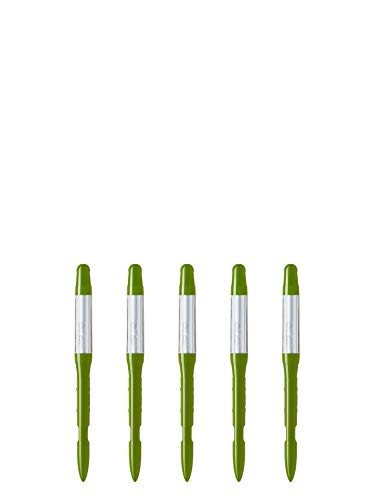
The Sustee Aquameter small set is designed for pot sizes of 2 to 3 inches, making it ideal for small succulents and tiny houseplants. It’s a leave-in soil moisture sensor pen, so you can monitor soil moisture continuously without removing the device. The set includes five refillable green sticks, each with a replacement core. Best for compact pots and plants that require careful moisture control. A potential limitation is the need to replace cores every 6–9 months for consistent readings.
Who it’s best for: Busy plant owners with small pots who want continuous, maintenance-light monitoring without constant insertion. It’s also suitable for hobbyists who prefer a simple, refillable system.
Why selected: Leaves in place for ongoing monitoring, reducing the guesswork of when to water small plants. The refillable design helps extend long-term use with minimal upkeep.
Caution: The small size may be less intuitive for very new gardeners; ensure the sensor is fully inserted into the root zone for accurate readings.
Sustee Aquameter — Medium Set

The medium Aquameter fits pots sized 3.5 to 6 inches, expanding monitoring to larger containers. Like the small version, it’s a leave-in sensor with five refillable sticks, designed for continuous moisture tracking. This option is better for average indoor pots and small to medium plants, where root zones matter most for hydration decisions. A limitation is the need to check that the soil is properly contacting the sensor for an accurate reading.
Who it’s best for: Plant owners with mid-sized containers who want consistent soil insight without daily meter insertion.
Why selected: Combines long-term monitoring with refillable cores, helping maintain healthy moisture levels across multiple mid-sized pots.
Caution: Best used when sticks are fully inserted into the root zone; shallow placement can skew results.
XLUX Soil Moisture Meter (2015)
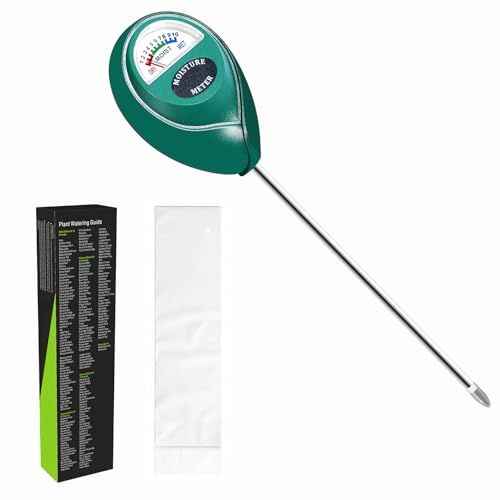
The XLUX 2015 model is a trusted, battery-free meter with a durable 304 stainless steel probe. It reads moisture at the root zone, providing immediate feedback in a large, color-coded dial with 10 scales (Dry-Moist-Wet). It is suitable for indoor plants, outdoor beds, and containers, and is especially popular for long-term use. A limitation is that the metal tip can corrode if left inserted for too long; food for thought when using in very moist soils or extended time frames.
Who it’s best for: Gardeners seeking a long-proven, easy-to-read device without batteries and who monitor root-zone moisture across many common houseplants.
Why selected: Durable construction, simple interpretation, and a broad user base make this a reliable standby for many households.
Caution: Do not leave in soil for extended periods to prevent tip corrosion; remove if you need to service the pot.
XLUX Long Probe Deep Use — 1 Pack

This XLUX model features a longer 5.5-inch probe, designed to measure moisture deep inside larger pots and garden beds. The large dial with three zones and ten scales makes readings straightforward, enabling quick decisions on watering. A notable caution is to avoid leaving the meter inserted for more than about five minutes to minimize corrosion risk to the probe.
Who it’s best for: Gardeners with deep pots or elevated planters who need root-zone insight beyond shallow surface readings.
Why selected: The deep probe expands applicability to larger containers and outdoor pots, bridging gaps between indoor-only meters and field uses.
Caution: Prolonged insertion may risk corrosion on the metal tip; remove after reading when possible.
XLUX Long Probe Deep Use — 2 Pack

This two-pack provides the same deep-probe capability as the single-pack, allowing monitoring of multiple large pots or plots. The extended probe length remains ideal for root-zone readings in bigger containers. A potential drawback is the need for careful placement to avoid shading or root interference in dense plantings.
Who it’s best for: Users with several large pots or garden beds who want the convenience of a paired solution for different zones.
Censinda Soil Moisture Meter
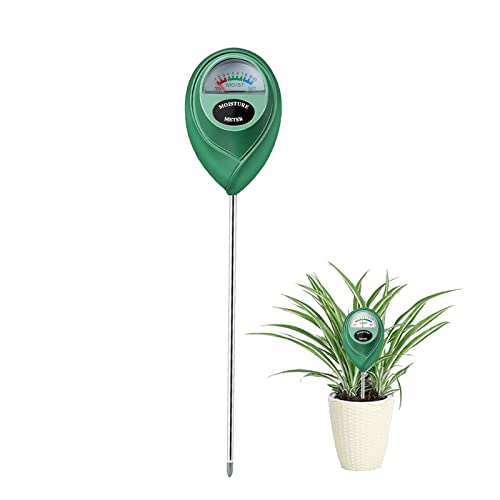
The Censinda meter offers a battery-free reading of soil moisture for indoor and outdoor use. It focuses on ensuring you avoid overwatering with a quick, no-battery probe that reaches the root region for accurate moisture status. This model is straightforward for beginners and useful for diverse plantings from houseplants to lawns. A limitation is that some users may want a broader scale or additional features for extreme moisture ranges.
Who it’s best for: Gardeners who want a simple, quick read without any power requirements and with minimal maintenance.
Why selected: No battery dependency and fast readings suit casual and beginner gardeners, helping prevent overwatering across varied plant types.
UNIWA Soil Moisture Meter — 2-Pack
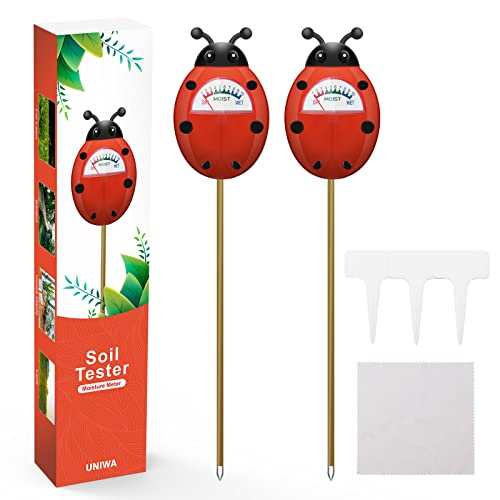
The UNIWA 2-pack uses a dual-needle detection technology to improve reading speed and accuracy. It’s battery-free and compact, making it easy to use for indoor and outdoor gardening. The meter’s clear dashboard with an arrow pointer simplifies interpretation. Best for gardeners who want portable, reliable readings across several spots. A caveat is the need to ensure consistent contact with soil to avoid skewed results in very dry or very wet soils.
Who it’s best for: Users needing a compact, battery-free option for quick checks across multiple plants or beds.
Why selected: Dual-needle technology enhances accuracy, and the battery-free operation reduces maintenance and replacement concerns.
Buying Guide: Key Considerations For Choosing A Watering Indicator
What pot size and plant type do you care for?
Choose a meter that matches your pot size. Small pots benefit from compact, refillable sticks (like Sustee Small). Larger containers benefit from long-probe models (like XLUX deep-probe meters) to reach the root zone.
Battery-free vs. battery-dependent meters
Battery-free meters are low-maintenance and reliable in continuous-use scenarios. Battery-powered meters can offer advanced features, but require replacement or charging over time.
Readability and interpretation clarity
Look for meters with large dials and color-coded zones (Dry, Moist, Wet). Intuitive displays reduce guesswork and support quick watering decisions.
Durability and material quality
Stainless steel probes offer longevity in outdoor use, while plastic probes may be lighter but less durable. Consider storage, exposure to moisture, and soil salinity when selecting a model.
Maintenance and replacement parts
Refillable sticks or replacement cores extend the life of a unit. Check availability of replacement parts and the expected frequency of replacements in your chosen product.
Usage context: indoor, outdoor, or both
Indoor houseplants may require shorter probes and smaller scales, while outdoor containers and gardens may need long probes and more robust builds to withstand exposure.
Compatibility with multiple plants
Some meters are optimized for root-zone readings across many plant types; others are better suited for specific species. If you care for a diverse collection, prioritize a versatile model with accurate root-zone detection.
FAQ
How do I know where to insert the meter?
Insert the probe into the root zone, typically near the base of the plant and away from pot edges. Ensure the soil surrounds the probe for an accurate reading.
Do these meters require batteries?
Most meters in this list are battery-free. Some models may use batteries for display or extra features; always check the product details.
How often should I check moisture levels?
For most houseplants, check every 3 to 7 days, adjusting frequency based on plant type and pot size. In hot, dry conditions, more frequent checks may be necessary.
Can I reuse the same meter for different plants?
Yes, many meters are designed for multi-plant use. Place the meter in the root zone of each plant when testing different pots, and store properly between uses.
What’s the best meter for beginners?
Meters with clear dials and color-coded zones, such as XLUX and Censinda models, are typically easiest for beginners due to straightforward readings and minimal setup.