When you need to cut through stubborn tree roots, choosing the right tool saves time, reduces effort, and minimizes damage to surrounding soil. This guide highlights five top options well-suited to different kinds of jobs—from compact garden tasks to heavy-duty root clearing. Best for serious digging in hard ground, the Root Slayer line and other quality tools offer serrated blades, inverted V cutting tips, and durable steel builds. Suitable buyers include homeowner gardeners, landscape professionals, and DIY renovators tackling root obstructions in beds, lawns, and around foundation lines.
| Product | Brand | Why It’s Included |
|---|---|---|
| Root Slayer 22011 Garden Shovel with Serrated Blade | Root Slayer | Versatile serrated blade with V-shaped tip for tough roots; heavy-duty carbon steel. |
| Root Slayer 22311 Nomad Compact Steel Garden Spade | Root Slayer | Smaller, portable option with strong serrations for tight spaces. |
| Truper Multi-Purpose Sharp Coa Hoe | Truper | Induction-hardened blade and long handle for reach and durability. |
| HANTOP Drain Spade Root Saw Spade | HANTOP | Narrow profile with teeth for precise root cutting and trenching. |
| Root Slayer 16011 Garden Trowel | Root Slayer | Compact trowel with serrated blade and inverted V tip for precise root work. |
Root Slayer 22011 Garden Shovel With Serrated Blade
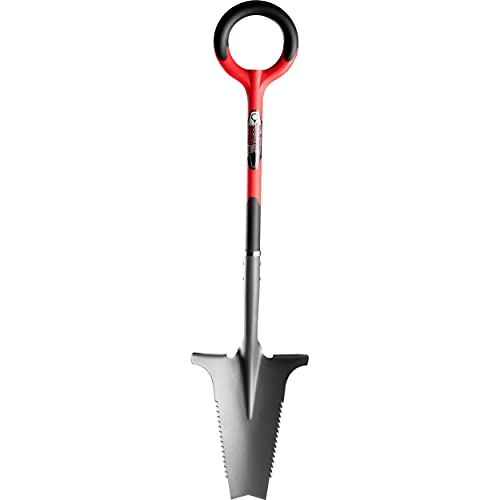
The Root Slayer 22011 combines a serrated garden shovel with a V-shaped cutting tip to slice through stubborn roots and dense soil. The carbon steel blade with a protective powder-coated finish resists rust and stands up to repeated outdoor use. Best for: homeowners handling medium-to-large roots in garden beds or landscaping projects. Limitation: may be heavier than compact tools for precise, one-handed tasks.
Root Slayer 22311 Nomad Compact Steel Garden Spade

The Nomad Compact Spade offers a serrated blade and inverted V tip in a smaller form factor. It’s ideal for tight spaces like raised beds or narrow planting areas where maneuverability matters. Best for: gardeners needing a portable tool for small plots or campsite work. Limitation: reduced leverage in very dense, large-root systems.
Truper Multi-Purpose Sharp Coa Hoe

The Truper Coa Hoe features an induction-hardened steel blade and a long tropical wood handle for increased reach and durability. While designed for general clearing, its sturdy build supports root cutting and soil penetration tasks. Best for: professionals clearing larger root masses or expanding accessible digging channels. Limitation: traditional hoe design may be less precise for isolated root segments in tight soil.
HANTOP Drain Spade Root Saw Spade

The HANTOP drain spade provides a narrow profile with a 1050MN steel head and fiberglass handle, plus a serrated edge and teeth for efficient root cutting. Best for: trenching and root cutting in tight spaces or along drains. Limitation: lighter handle may fatigue in long heavy-duty sessions.
Root Slayer 16011 Garden Trowel

The 16011 trowel features a serrated blade and inverted V tip to handle roots in confined spaces. Its carbon steel blade and powder-coated finish provide durability and rust resistance. Best for: transplanting and precise root removal in flower beds and perennial borders. Limitation: smaller blade may take more passes on large root masses.
Buying Guide: Key Purchase Considerations
- Task type: Choose tools with serrated blades and V-cut tips for tough roots; select compact designs for tight spaces.
- Durability: Look for carbon steel blades and powder-coated finishes to resist rust and wear.
- Handle design: Long handles aid leverage and reduce back strain; fiberglass or wooden handles offer different weight and feel.
- Ground conditions: For dense soil or clay, a sturdy, heavy-duty tool performs better; for garden beds, lighter options may suffice.
- Maintenance: Clean and dry blades after use; apply light oil to prevent rust; store in a dry place.
- Portability vs. leverage: Smaller tools are easy to maneuver; larger tools provide more cutting power but require more effort.
Frequently Asked Questions
- What tool is best for cutting deep tree roots?
– Heavy-duty root saws and serrated blades with inverted V tips are designed to cut through dense roots and compact soil efficiently. - Are carbon steel blades better than stainless for root cutting?
– Carbon steel blades typically maintain a sharp edge longer in demanding digging, though they may require more rust prevention care than stainless. - Is a long handle necessary for root removal?
– A longer handle improves leverage and reduces back strain, especially when cutting through thick roots. - Can I use a garden shovel for root cutting?
– A spade or shovel with serrated features or a dedicated root-cutting blade is generally more effective than a standard shovel for roots. - How should I maintain root-cutting tools?
– Clean after use, dry thoroughly, apply a light oil, and store in a dry location to prevent rust and corrosion. - Which tool is best for small garden plots?
– Compact shovels and nomad-style spades are easier to maneuver in raised beds and tight spaces.