Answering the core buyer question: the right water pressure regulator helps protect drip and sprinkler components, improves uniformity, and saves water. This guide highlights top regulators for residential irrigation, commercial drip systems, and RV or portable setups that feed irrigation lines. The selections cover a range of pressures, connection sizes, and durability to fit 3/4″ hose thread or standard outdoor faucets. Ideal for: homeowners upgrading a drip system, landscape installers seeking reliable regulators, and anyone needing consistent low-pressure water delivery to emitters.
| Product | Pressure Range | Thread Type | Best For |
|---|---|---|---|
| Rain Bird HT07525PSI Drip Regulator | 25 PSI | 3/4″ FHT x 3/4″ MHT | Drip lines and emitters in residential yards |
| Senninger PRLG 25 PSI | 25 PSI | 3/4″ Hose Thread | Low-flow installations; solid-set and drip systems |
| Breezliy 2-Pack 25 PSI Regulators | 25 PSI | 3/4″ FHT to 3/4″ MHT | Two-regulator kit for multi-branch drip lines |
| Habitech Drip Irrigation Faucet Adapter Kit | 25 PSI regulator included | ¾” male outdoors with 1/2″ tubing | All-in-one faucet-to-drip connection with regulator |
| Tondiamo 3 Pcs 15 PSI Regulators | 15 PSI | 3/4″ FHT x 3/4″ MHT | Multiple-regulator setups for drip systems |
Rain Bird HT07525PSI Drip Regulator

Best for: drip irrigation systems where a steady 25 PSI is needed to keep emitters uniform. This regulator connects to 3/4″ male or female threaded faucets and directs consistent flow to drip lines. The device handles up to 20 GPM, making it suitable for small to moderate residential installations. Choice rationale: stability at the target pressure reduces emitter pulsation and uneven watering. Limitation: not designed for very high-flow sprinkler zones; best paired with drip lines.
Senninger PRLG 25 PSI Pressure Regulator
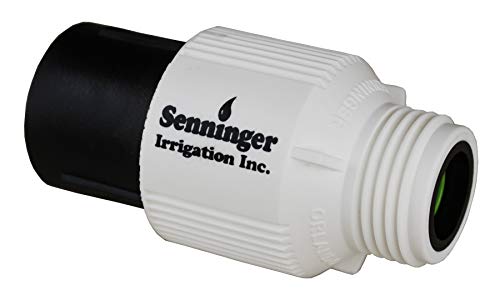
Best for: installations requiring precise low-flow control in landscape or irrigation installations that support drip lines, soaker hoses, or solid-set systems. Why selected: maintains a constant 25 PSI (1.72 bar) with a broad 0.5 – 7 GPM range, ensuring distribution uniformity and water efficiency. Caution: ensure compatibility with existing 3/4″ outdoor components; mis-matched fittings can cause leaks.
Breezliy 2-Pack 25 PSI Regulators

Best for: households deploying multiple drip zones or garden beds requiring separate regulation at each supply line. Why: two regulators at 25 PSI provide balanced pressure to different emitters, maintaining uniformity across zones. Limitation: the kit is pressure-specific; if a higher or lower pressure is needed, another regulator must be purchased.
Habitech Drip Irrigation Faucet Adapter Kit
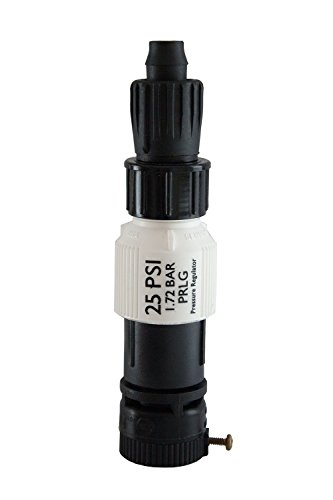
Best for: users seeking an all-in-one faucet-to-drip solution that includes a backflow preventer and a regulator. Why: pre-assembled with a Senninger 25 PSI regulator, a 150-mesh filter, and a backflow preventer, it reduces installation steps. Caution: space may be needed to accommodate the full kit and its fittings.
Tondiamo 3 Pcs 15 PSI Regulators
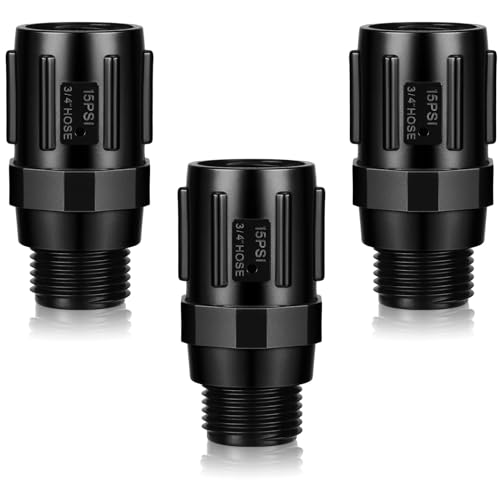
Best for: drip-driven systems needing multiple regulators at a lower pressure, ideal for long drip lines or micro-irrigation with many zones. Why: 15 PSI is gentler on emitters and can improve uniformity in very low-flow setups. Limitation: may require additional restrictions or zones if higher-pressure outlets are needed elsewhere in the same system.
Buying Guide: How To Choose The Right Water Pressure Regulator
Key considerations help align regulator selection with irrigation goals:
- Pressure needs: Drip systems typical require 15-25 PSI; sprinkler zones may need different levels. Choose regulators that maintain the target pressure across expected flow rates.
- Flow range: Ensure the regulator supports your GPM range. A regulator with too narrow a range can cause flow instability when zones start or stop.
- Connection type: Match to your faucet or hose connections (3/4″ FHT/MHT or other threads) to avoid adapters that create leaks.
- Material and durability: Brass constructions resist corrosion and are long-lasting; consider lead-free options for drinking-water compatibility within the system.
- System layout: For multi-zone drip setups, plan regulators for each branch or zone to preserve uniform pressure through the network.
- Additional components: Backflow preventers, filters, and timers can be integrated with regulators to protect water quality and system reliability.
FAQ
- Q: What PSI should I set my irrigation regulator to? A: Most drip systems aim for 15-25 PSI; adjust based on emitter requirements and line length to ensure proper flow.
- Q: Can I use a regular faucet regulator on a drip line? A: Yes, regulators designed for 3/4″ hose connections are suitable, but verify the flow and pressure range for drip emitters.
- Q: Do I need a regulator for every irrigation zone? A: Not always, but multiple regulators help keep pressure consistent across long or multi-branch networks.
- Q: Are all regulators lead-free? A: Many modern regulators use lead-free brass or compliant materials; check product specifications for lead content.
- Q: Will a regulator affect water filtration or backflow prevention? A: Regulators are separate components; consider combining with a filter and backflow preventer to protect emitters and water quality.
- Q: How do I install a regulator with a faucet adapter kit? A: Ensure proper thread matching, use Teflon tape on threads, and tighten to prevent leaks. Follow kit instructions for best results.