Answering the need for efficient soil preparation, these tillers are well-suited for raised beds, flower beds, and small gardens. Cordless models excel where outlets aren’t handy, while corded units deliver steady power for tougher soils. This guide highlights five options that balance ease of use, depth and width, and ergonomic design to match different garden sizes and physical needs.
| Product | Best For | Key Benefit |
|---|---|---|
| Muylux 20V Cordless Tiller Cultivator | Small to medium raised beds | Lightweight, cordless flexibility |
| Saker 22V Cordless Garden Tiller | Compact spaces | 9″ width, 6.3″ depth, quick setup |
| Muylux 20V Cordless Tiller Cultivator (2 Batteries) | All-day gardening | Two batteries for extended sessions |
| Alloyman 20V Cordless Tiller | Hard-to-reach spots | 360 RPM, strong 9″ width |
| GELIDALITE 20V Cordless Tiller | DIY raised beds | DeWalt 20V compatibility, long runtime |
Muylux 20V Cordless Tiller Cultivator

Best for light to moderate soil tasks in small to medium raised beds. The Muylux model uses two steel tines spinning up to 240 RPM to loosen soil about 4 inches deep. It’s ideal for quick soil prep, lawn aeration, or breaking up compacted ground without dragging cords through the garden. The cordless design supports tight spots and comfortable, long-use sessions for casual gardeners and seniors who prioritize mobility.
Who this is for: gardeners who want a lightweight, easy-to-maneuver tiller for raised beds and potted borders, without reliance on a power outlet. Choose this if you value low fatigue and simple operation.
Caution: Not designed for heavy, rocky soil or deep heavy tilling beyond 4 inches in a single pass.
Saker 22V Cordless Garden Tiller Cultivator

Best for small gardens and tight spaces where cord access is impossible. The Saker model operates at 360 RPM with 4 steel tines, offering a 9-inch tilling width and 6.3-inch depth. Its lightweight design includes an adjustable auxiliary handle, which helps maintain control during longer sessions. This makes it a practical choice for beginners and gardeners who need a nimble tool for sporadic bed preparation and weeding.
Who this is for: homeowners with compact plots or raised beds that require precise, shallow aeration and weed removal. It’s a solid pick when you want quick setup and minimal fatigue.
Caution: Best used on softer or moderately compacted soils; very dense soil may require multiple passes or a more powerful model.
Muylux 20V Cordless Tiller Cultivator (2 Batteries)

This version emphasizes extended use with two batteries, making it suitable for larger raised beds or weekend garden beds that need multiple passes. It shares the same lightweight, ergonomic grip and 4-inch deep tilling capability with up to 240 RPM. The extra battery helps reduce downtime between passes, supporting more efficient soil preparation and aeration.
Who this is for: gardeners who perform longer tilling sessions or larger areas and want uninterrupted operation. Choose this if you dislike frequent battery swaps.
Caution: Longer runtimes require mindful charging; avoid deep discharges to maximize battery life.
Alloyman 20V Cordless Tiller Cultivator
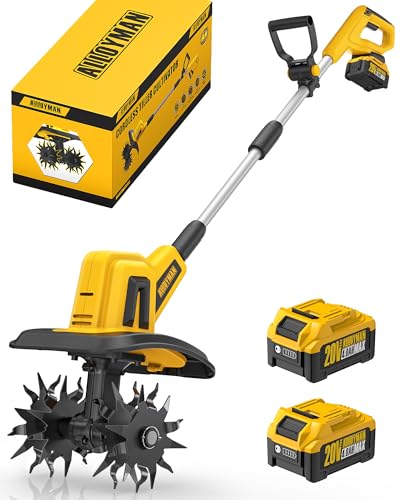
Best for reaching into tight or awkward spaces around raised beds with a wider tilling capability. The Alloyman model features 360 RPM with 9-inch width and 6-inch depth, plus four durable steel tines. Its cordless design and adjustable auxiliary handle help reduce fatigue during longer weeding and soil-turning sessions, making it a good fit for gardeners who value maneuverability and quick bed refreshes.
Who this is for: those working in narrow borders, container gardens, or beds with edges that require careful edging and aeration. Choose this if you need strong performance without a power cord.
Caution: As with other cordless tools, performance can drop in very compacted or very rocky soils; plan for multiple passes if needed.
GARDTECH 21V Cordless Tiller Cultivator

Best for raised beds and small plots where a longer runtime matters. The GARDTECH model uses a 21V battery and 4 hardened tines to till about 4 inches wide and 4 inches deep at a steady 235 RPM. Its 40–60 minute runtime depends on battery capacity, making it suitable for single-bed refreshes or frequent maintenance in smaller gardens. It’s particularly well-suited for seniors and beginners due to its lightweight, user-friendly design.
Who this is for: gardeners who want a compact tool that handles raised beds, flower beds, and containers without dealing with cords. Choose this if you prioritise a longer single-session runtime and simple operation.
Caution: Tilling depth is modest; for hard-packed soil you may need to revisit with a second pass.
Sun Joe TJ604E Corded Electric Tiller

Best for gardeners who need steady power for small to mid-sized beds without worrying about battery life. The Sun Joe TJ604E uses a 13.5-amp motor to till up to 16 inches wide and 8 inches deep. It features six rust-proof steel tines for durability and efficient soil turnover. The folding handle improves storage and transport, which is advantageous for homeowners with limited garage space or multiple beds to manage.
Who this is for: those with reliable access to a power outlet and larger planned beds who want a higher tilling width and deeper reach. Choose this if you value raw power and a longer tilling path in one pass.
Caution: Being corded, it requires proximity to an outlet and can limit movement in very large outdoor spaces.
Buying Guide: Key Considerations For Raised Beds
Should I choose cordless or corded?
Cordless models offer mobility and clean handling in tight spaces, ideal for raised beds with edges and smaller plots. Corded units provide consistent power for deeper tilling and larger areas, but require access to a power outlet and mindful cord management.
What tilling width and depth do I need?
Raised beds often benefit from 4–9 inch widths and 4–6 inch depths, depending on soil density and bed dimensions. Wider tilling reduces the number of passes, but may be harder to maneuver in narrow beds.
How important is runtime and battery life?
Extended runtime matters for bigger beds or frequent maintenance. Models with two batteries or higher-capacity packs offer fewer interruptions, especially when you have multiple beds to prepare.
What about weight and ergonomics?
Lightweight tillers with ergonomic grips help reduce fatigue during long sessions. An adjustable auxiliary handle or anti-slip features improve control, especially for seniors or gardeners with joint strain.
Are there safety features to consider?
Look for blade guards, protective covers, and clear instructions about soil types. A compact design with a comfortable grip lowers the chance of slips and injuries during use.
What kind of soils benefit most?
Loosened, mildly to moderately compacted soils respond well to tillers, especially when combined with pre-watering. Very hard or rocky soil may demand more powerful units or multiple passes to avoid blade wear.
Frequently Asked Questions
- Can raised beds be tilled with cordless models? Yes, cordless tillers handle raised beds well, particularly for small to medium beds where freedom of movement matters.
- What maintenance do tillers require? Regularly check tines for wear, clean soil residue after use, and store batteries in a cool, dry place to extend life.
- Is deeper tilling necessary for raised beds? Typically 4–6 inches is sufficient for bed preparation; deep tilling is rarely needed for raised beds with good drainage.
- Should I use tillers for weed control? Tilling can disrupt weeds but may bring weed seeds to the surface. Combine with targeted weeding for best results.
- Are there safety tips for beginners? Start with a light pass, wear protective gear, and maintain a firm stance to prevent slips, especially on uneven ground.
- Can I use a corded tiller in a raised bed near a fence? Yes, but plan cord routing to avoid tangling, and ensure there’s enough clearance for safe operation.