Answer: Small greenhouse kits designed for winter use help protect tender plants from frost, extend the growing season, and manage humidity and UV exposure. These options are ideal for backyard gardeners, urban growers with limited space, and hobbyists who want a quick setup. The following five kits balance durability, ease of assembly, and winter-ready features like polycarbonate panels, venting, and sturdy frames to keep plants thriving when temps drop.
| Product | Best For | Key Benefit |
|---|---|---|
| HOOYEAH 6×8 FT Polycarbonate Greenhouse | Backyard gardeners seeking durability | Heavy-duty aluminum frame with lockable door and roof vent |
| Sylviera 6x4FT Greenhouse | Compact setups with winter protection | 4mm thick polycarbonate panels; UV-resistant |
| EAGLE PEAK 8×6 Portable Walk in Greenhouse | Ease of setup and mobility | Center lock pop-up design; PE cover with wind resistance |
| Garvee 6×10 FT Greenhouse | Stability for larger winter crops | 720 g/m² panels; solid aluminum frame; water gutter |
| WUKHG 8x10FT Greenhouse | Tech-enabled climate monitoring | Thermometer/hygrometer with app; UV-resistant panels |
HOOYEAH 6×8 Ft Polycarbonate Greenhouse

Best for: Backyard gardeners who want a robust, semi-permanent winter-ready growing space. This kit features a heavy-duty aluminum frame, a locking door, and a roof vent to regulate heat build-up on sunny winter days. The UV-protected polycarbonate panels diffuse light for even plant growth, creating a gentle indoor-light environment ideal for vegetables, herbs, and flowers.
- Why chosen: Combines durability with practical features for winter protection in a moderate footprint.
- Best use case: Long-season vegetables like kale, spinach, and herbs; small fruiting crops in cooler months.
- Caution: Panels are not fully transparent; light diffusion is milky, which may affect certain light-loving plants.
Sylviera 6x4FT Greenhouse
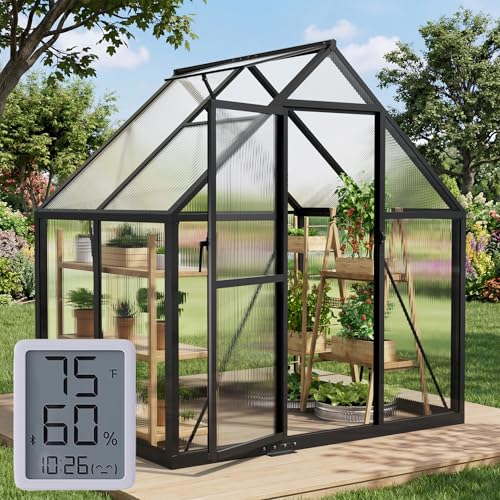
Best for: Small-space gardens that still need winter protection. The 6×4 footprint fits tight yards or patios while providing a sturdy, weather-resistant enclosure for year-round growing.
- Why chosen: Strong aluminum alloy frame and 4mm thick polycarbonate panels offer resilience against winter winds and moisture.
- Best use case: Vegetables, herbs, and flowers that benefit from a warmer microclimate in cold months.
- Caution: Assembly requires careful alignment; follow the included manual to ensure stability in gusty conditions.
Garvee 6×10 FT Greenhouse

Best for: Gardeners with a larger winter crop list who still want manageable assembly. The wider 6×10 footprint supports more plants while maintaining a reasonable setup effort.
- Why chosen: Robust 720 g/m² polycarbonate panels and a sturdy aluminum frame provide winter stability and wind resistance.
- Best use case: Winter-season vegetables, ornamentals, and herbs with space to spread out.
- Caution: The larger size requires more stable anchoring; ensure ground or footprint is suitable for secure installation.
WUKHG 8x10FT Greenhouse

Best for: Tech-forward growers who want monitoring alongside winter protection. The thermometer/hygrometer app integration helps track temperature and humidity remotely for consistent conditions.
- Why chosen: Combines strong aluminum frame and 720g PC panels with a modern climate-monitoring setup for winter care.
- Best use case: Seed starting, overwintering tender plants, and maintaining stable humidity and temperature during cold spells.
- Caution: App features require pairing and a compatible device; check compatibility before purchase.
Buying Guide: Key Winter-Greenhouse Considerations
What size fits your space and plants?
- Small spaces: 4×6 to 6×6 foot units offer sufficient growing area without dominating a yard or balcony.
- Medium yards or patios: 6×8 or 8×6 models balance space and airflow for better winter conditions.
What frame and panel materials matter?
- Solid aluminum frames resist rust and warping; polycarbonate panels diffuse light and block UV, helping maintain steady interior temperatures.
- Shatter-resistant panels with good insulation are preferred for winter protection.
Do you need ventilation and climate monitoring?
- Roof vents and roll-up windows improve airflow to prevent excess humidity and heat buildup on sunny winter days.
- Built-in thermometers or app-based monitoring help manage indoor conditions for seeds and frost-sensitive plants.
How easy is assembly and maintenance?
- Look for kits with labeled parts, clear instructions, and slide-in panels to speed setup and reduce tool requirements.
- Consider gutter systems or water channels to simplify watering and drainage during rain or melting snow.
Additional Tips
- Secure anchoring is essential for windy winter days; ensure you have proper stakes or ballast for your ground type.
- Position away from heavy shade but with access to sunlight for most of the day to maximize light exposure in winter.
FAQ
- What is the best greenhouse for winter use in small spaces? For compact yards, models around 6×4 to 6×8 with polycarbonate panels and a solid frame offer a good balance of protection and accessibility.
- Do winter greenhouses require electricity? Some do for heating or climate-monitoring devices; many operate well without electricity with proper insulation and passive venting.
- Can I overwinter herbs in a small greenhouse? Yes, herbs like thyme, rosemary, and parsley can thrive with stable temperatures and light exposure.
- Are polycarbonate panels better than glass for winter? Polycarbonate panels are generally more impact-resistant, lighter, and better at diffusing light and reducing heat loss.
- Do these kits come with assembly tools? Many kits include basic tools or components and rely on standard household tools; check the product listing for specifics.
- How do I maintain humidity inside a winter greenhouse? Use ventilation strategies, water trays or gutters, and monitor humidity with a hygrometer to prevent mold and edema in plants.