Answering the need for clean, clear koi pond water, these sieve-style or pre-filtration options help remove debris before it hits your main filter. This guide highlights five effective sieve or sieve-like filters, showing which pond keeper each is best for. If you run a gravity-fed setup, a pump-fed system, or a combination, you’ll find choices that balance ease of maintenance with reliable flow. Ready for a straightforward upgrade to your pond’s filtration? Read on to compare the top picks and pick the right fit for your fish, pond size, and maintenance routine.
Summary Table
| Product | Best For | Key Benefit |
|---|---|---|
| Evolution Aqua Cetus Sieve | Customizable gravity or pump-fed setups | Constant flow with water level changes |
| SUNSUN CBF-350 Bio Gravity Filter | Pond with fish up to 1500 gallons | Coarse dirt drain and multiple filter media options |
| TetraPond Submersible Flat Box Filter | Smaller to mid-size ponds (250–500 gal) | Prevents pump clogging and easy maintenance |
| OASE BioSmart 5000 | Medium to larger koi ponds | Distinct filtration zones and built-in cleaning indicators |
| TotalPond Complete Pond Filter with UV | Ponds up to 1200 gallons | Integrated UV clarifier and pressurized flow |
Evolution Aqua Cetus Sieve

The Cetus Sieve from Evolution Aqua is designed for both gravity-fed and pump-fed installations. Its patented flow regulation system maintains a constant output even when water levels fluctuate, reducing the risk of shutoffs and improving overall filtration stability. The 300 micron sieve size targets fine debris before it reaches downstream filters, making it a strong option for koi ponds with moderate to heavy debris. Best for ponds seeking steady flow without frequent adjustments, especially in variable weather or seasonal water level changes.
Best for: Pond keepers who want consistent flow and pre-filtration for medium to large ponds.
Caution: Setup and plumbing must ensure proper venting and flow orientation; misconfiguration can affect flow regulation performance.
SUNSUN CBF-350 Bio Gravity Pond Filter
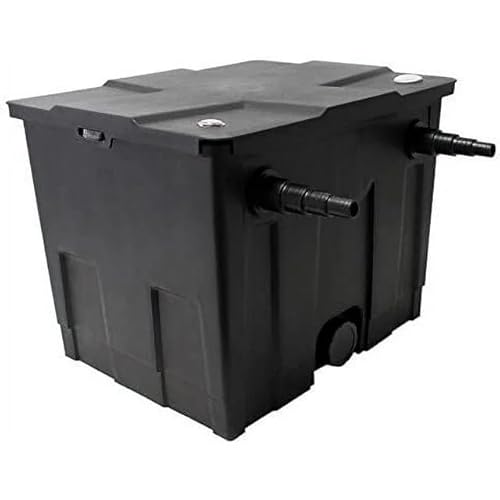
The SUNSUN CBF-350 is a gravity-based filter designed for koi ponds up to 1,500 gallons, with capability to handle ornamental ponds up to 3,000 gallons. It features a dirt drain at the bottom for coarse debris and multiple filter media options (e.g., special sponge and matting). This makes it a flexible choice for pond owners who want to tailor filtration to their water quality needs. Best for: Ponds where gravity-fed design and media customization are priorities.
Better for: Those who want straightforward debris removal and media variety to balance ammonia and nitrate levels.
Caution: Be mindful of flow rate and head-height requirements; gravity-fed systems may require precise siting to maintain optimal flow.
TetraPond Submersible Flat Box Filter
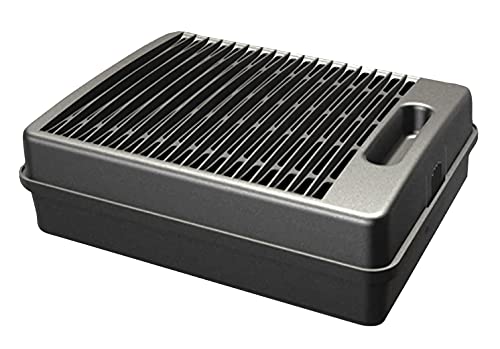
The TetraPond Submersible Flat Box Filter is a compact, submersible option designed to prevent pump clogging and keep pond water clearer. It comes with coarse and fine foam pads, tubing, and fittings, and is easy to detach for cleaning. This makes it a practical choice for smaller to mid-sized ponds where a simple, reliable pre-filtration step is desired. Best for: Ponds where space is limited and easy maintenance is a priority.
Choose this if: You want a straightforward, submersible solution that pairs with a compatible pump to reduce clogging and simplify cleaning.
OASE BioSmart 5000 Pond Filter
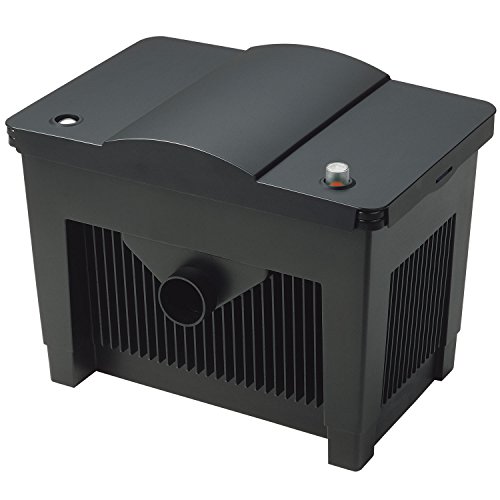
The OASE BioSmart 5000 is designed with distinct zones that promote beneficial bacteria and reduce maintenance effort. Its built-in cleaning mechanism minimizes the need to remove or manually unclog foams, and features a cleaning indicator, temperature gauge, and sludge drain for enhanced usability. Best for: Mid-to-large koi ponds where user-friendly automated features help reduce routine maintenance.
Limitation: While maintenance is simplified, the filter’s more complex design may require closer adherence to installation guidelines to maximize efficiency.
TotalPond Complete Pond Filter With UV
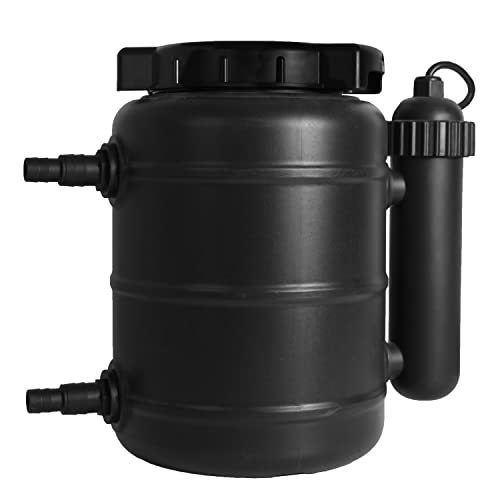
The TotalPond Complete Pond Filter with UV Clarifier is designed for ponds up to 1,200 gallons. It combines mechanical filtration with bio-media to promote beneficial bacteria growth, and the UV clarifier helps address green water. The pressurized design keeps water moving, helping debris stay suspended less and preventing stagnation. Best for: Ponds needing comprehensive filtration—mechanical, biological, and UV cleaning—in a single unit.
Limitation: The integrated system is best used with a pump of suitable capacity; inadequate pump sizing can limit performance.
Buying Guide: Key Considerations for Sieve Filters in Koi Ponds
- Filtration philosophy: Choose between gravity-fed, pump-fed, or pressure-filter designs based on pond layout and maintenance preference.
- Flow and turnover: Consider how many gallons per hour (GPH) your pond needs and whether the sieve supports stable flow during seasonal changes.
- Debris management: Look at micron rating, dirt drains, and media options to balance mechanical and biological filtration.
- Maintenance convenience: Features like easy cleaning, backflushing, built-in indicators, and modular components reduce downtime.
- Compatibility: Ensure the unit matches pond size, fish load, and existing pump or piping configurations.
- UV integration: If you battle green water, an integrated UV clarifier can simplify setup and maintenance.
- Space and installation: Some units are submersible or compact, while others require external placement and plumbing planning.
Frequently Asked Questions
- What is a sieve filter, and why is it used in koi ponds?
A sieve filter is a pre-filtration stage that traps solid debris before it reaches downstream filtration, helping keep pumps clean and water clearer for koi ponds.
- Should I choose gravity-fed or pump-fed sieve filters?
Gravity-fed systems are simple and rely on height-driven flow, while pump-fed systems provide stronger and more controllable flow, often with easier maintenance access.
- Can a UV clarifier be used with sieve filters?
Yes. UV clarifiers are commonly added to improve water clarity by reducing green algae, either integrated or as a separate module after filtration.
- How do I determine the right filter size for my pond?
Match the filter’s recommended pond capacity and flow rate to your pond’s gallons and your pump’s GPH rating for balanced turnover.
- What maintenance steps are essential for sieve-based filtration?
Regularly inspect and clean the sieve screen, backflush according to system design, and check media condition to maintain efficient flow.
- Are there any risks with undersized filters?
Undersized filters can cause frequent clogs, reduced flow, and higher maintenance needs, potentially stressing koi with fluctuating water quality.